
Trainee Organizers
Jordan Francis
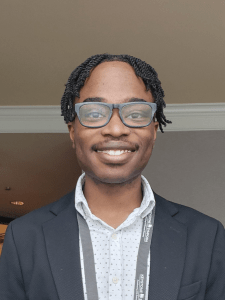
Jordan is a Master’s student in Dr. Natoya Peart’s Lab at the University of Waterloo. He studies the role of ESRP1, an RNA-binding protein expressed in epithelial cells, in intestinal homeostasis. As a member, he wishes to foster connections between the Toronto RNA Club and other university RNA clubs beyond the GTA.
Anna Girtle
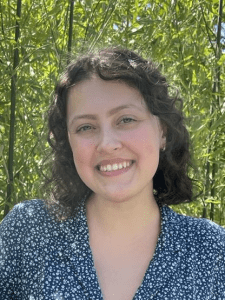
Anna is a Ph.D. student in Dr. Philipp Maass’s lab at SickKids. Her research involves decoding the role of a novel long non-coding RNA locus in blood pressure control and hypertension. As an organizer of Toronto RNA Club, she hopes to spread awareness of the brilliant RNA research taking place in the area and foster connections between researchers.
Connor Loupelle
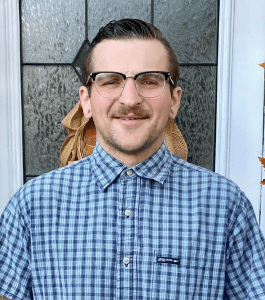
Connor is a Ph.D. student in Dr. Mark Bayfield’s lab at York University, where he studies the roles of the human La protein in promoting tRNA maturation and its links to oncogenesis. He received his B.Sc. in Biomedical Science from York University. As a member of the Toronto RNA Club organizing committee, Connor aims to foster connections among members of the RNA community within the GTA and abroad, and to contribute meaningfully to the Canadian research ecosystem by enhancing exposure to RNA research.
Volker Nitschko
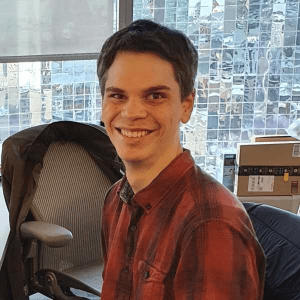
Volker is a postdoc in Dr. Julie Claycomb’s lab at the University of Toronto, and is studying the role of miRNA-binding Argonautes during spermatogenesis. He joined the Toronto RNA club organizing committee to help connect RNA researchers and foster new collaborations.
Brittney Remnant
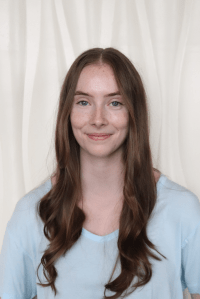
Brittney is a Ph.D. student in Dr. Mark Bayfield’s lab at York University. She is investigating the La protein Mlp1 in Tetrahymena thermophila and its involvement in the biogenesis of non-coding RNAs. As an organizing member of the Toronto RNA Club, she hopes to foster connections between individuals in the RNA community across training levels and encourage the exchange of knowledge and ideas.
Rasangi Tennakoon
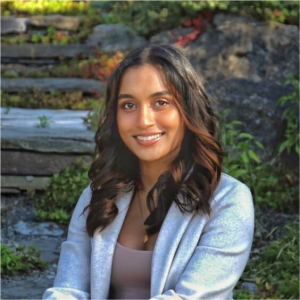
Rasangi is a Ph.D. student in Dr. Haissi Cui’s lab in the Department of Chemistry at the University of Toronto. Her research involves the investigation of aminoacyl-tRNA synthetases in white matter brain disorders. As a Toronto RNA organizer, Rasangi hopes to grow the connections between RNA researchers in the Greater Toronto Area, and help foster an inclusive learning environment.
Emma Walter
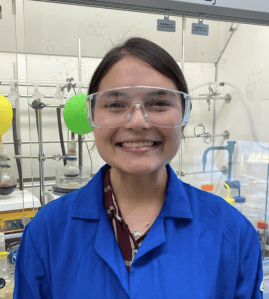
Emma is a Ph.D. student in Dr. Amanda Hargrove’s lab at the University of Toronto Mississauga in the Centre for Medicinal Chemistry. Her research focuses on developing small molecules to target a long noncoding RNA implicated in prostate cancer. As an organizer of Toronto RNA Club, she hopes to further unite the GTA RNA labs and foster curiosity driven discussions between researchers.
Zhuyi Wang
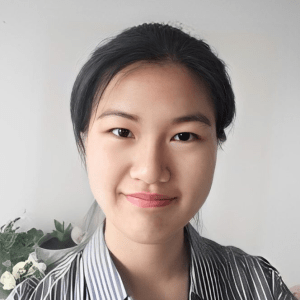
Zhuyi is a Ph.D. student in Dr. Craig Smibert’s lab at the University of Toronto. As an RNA enthusiast, she is interested in how miRNAs facilitate a smooth maternal-to-zygotic transition, the first major event during animal embryogenesis. As an organizing member, Zhuyi looks forward to developing a platform where ideas move freely between subfields and inspire more “Aha moments”!
Michael Zoberman
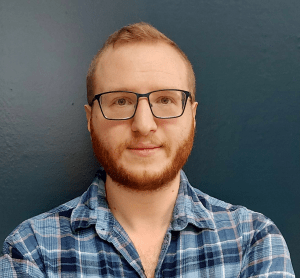
Michael Zoberman is a Ph.D. student in the Calarco Lab at the Department of Cell and Systems Biology in the University of Toronto. He is researching the role of intracellular signalling pathways in the regulation of RNA-binding proteins to control neuronal alternative splicing networks in C. elegans. As an organizing member, Michael hopes to help RNA researchers meet and learn from each other to promote and strengthen the local RNA community.
Trainee Alumni
Sameen Ahmed, Pallavi Pilaka-Akella, Giovanni Burke, Yifan (Eva) Wang, Evelyne Collignon, Giacomo Furlan, Mathias Renaud, Negin Khosraviani, Lamisa Mizan, Janine Truong, Amanda Charlesworth, Lauren Ostrowski, Marat Mufteev, Matthew Hildebrandt, Akashdeep Dhillon, Geraldine Seydoux, Eesha Sharma, Nevraj Kejiou, Amanda Hall, Julia Sobotka, Monica Wu, Miranda Wang, Chris Wedeles, Melissa Wong, Danielle Bilodeau, Ashrut Narula, Charlotte Martin, Sharanja Premachandran, Farnaz Mansouri-Noori, Samuel Nyandwi.
Faculty Mentors
Dr. Julie Claycomb (Co-Chair)

Julie Claycomb is Professor and Vice Chair in the Department of Molecular Genetics at the University of Toronto. Work in the Claycomb lab focuses on understanding the mechanisms of germline small RNA pathways using the nematode C. elegans as a model system.
Dr. Philipp Maass (Co-Chair)
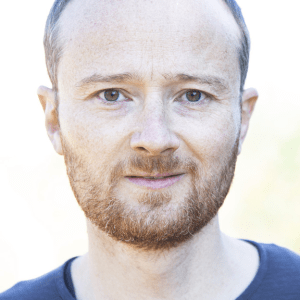
Philipp Maass is an Assistant Professor in the Department of Molecular Genetics at the University of Toronto. The Maass lab’s central objective is to gain mechanistic insight into regulatory functions of the non-coding genome. By applying systems biology approaches in RNA & genome biology, they address 1) how yet uncharacterized long non-coding RNA genes function, 2) how chromosomal territories are organized, and 3) how inter-chromosomal contacts facilitate gene regulation and genome organization to better understand biology and etiology of disease.
Dr. John Calarco
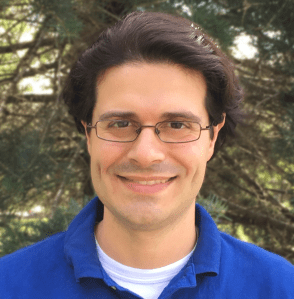
John Calarco is an Associate Professor in the Department of Cell and Systems Biology at the University of Toronto. His research focuses on understanding mechanisms governing post-transcriptional gene regulation in the nervous system, with a particular focus on alternative splicing. John is excited to be serving as a faculty mentor for TREnD.
Dr. Haissi Cui
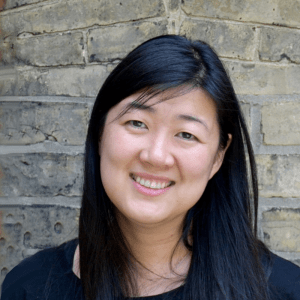
Haissi Cui is an Assistant Professor in the Department of Chemistry at the University of Toronto. The Cui lab develops new chemical tools to probe RNA processes in mammalian cells, specifically tRNA dynamics and aminoacylation. Further, the group characterizes cell line and animal models to study rare neurodevelopmental disorders caused by a dysregulation of RNA-binding and modifying proteins and explores new approaches to RNA therapies.
Dr. Amanda Hargrove
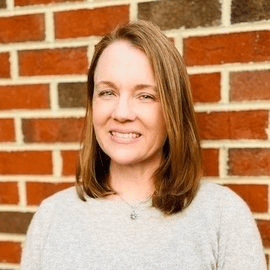
Amanda Hargrove is a Professor of Chemistry at the University of Toronto and the Canada Research Chair in RNA-Targeted Drug Discovery. The Hargrove Lab works at the interface of chemistry and biology, using organic chemistry to study the structure and function of regulatory RNAs, including long noncoding RNAs (lncRNAs) and viral RNAs, and leveraging these insights toward therapeutic targets.

